

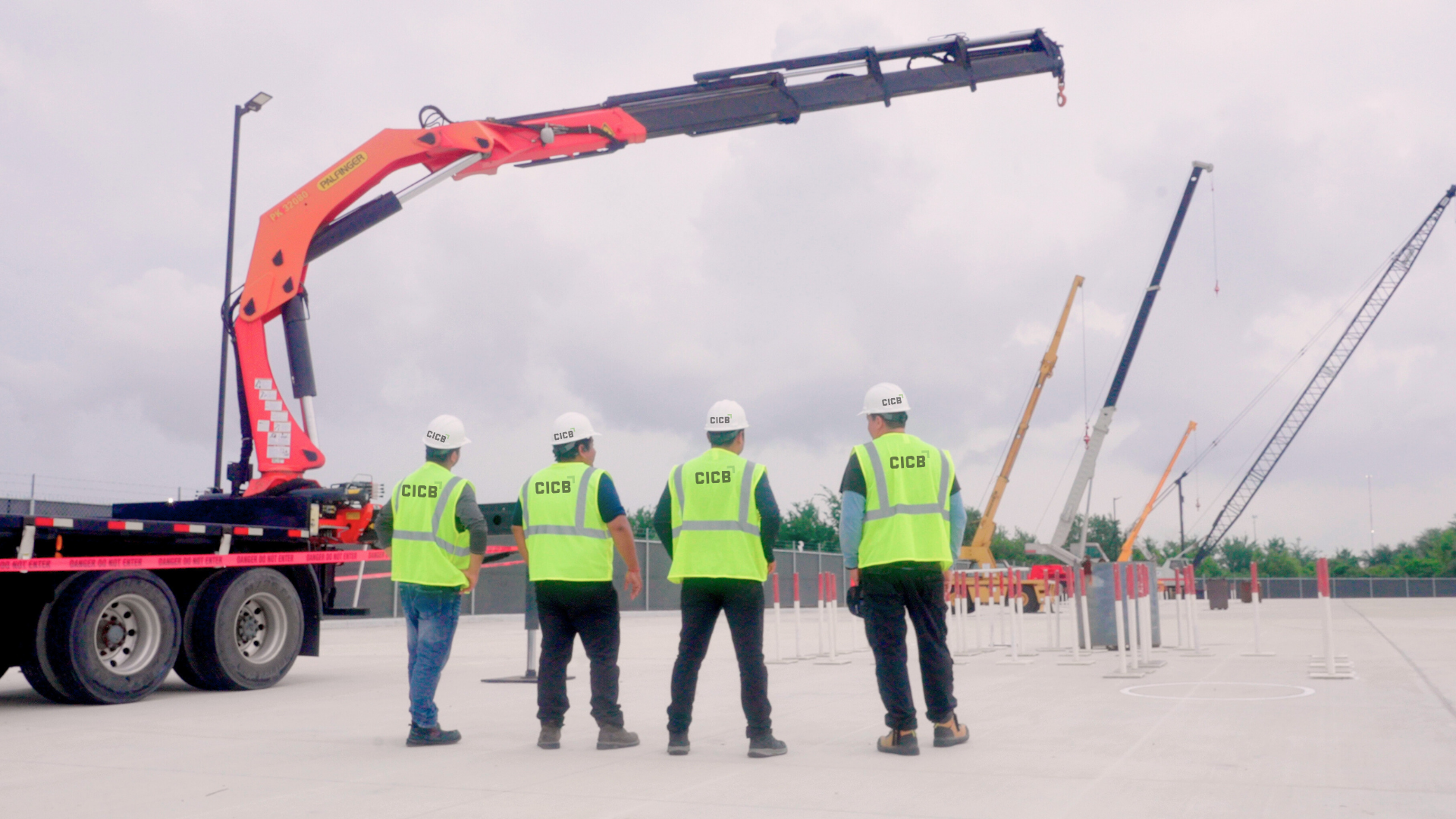
While VR has grown as a training tool, industrial settings still depend on the skills and experiences of hands-on operators. As industry decision-makers and site managers explore the best ways to reduce risk and implement efficiency, it is natural to compare various training methods' effectiveness.
This hands-on vs. VR crane training comparison explains how relying solely on VR can create dangerous skills gaps and what to consider when selecting a crane operator training program that meets work deadlines and promotes safety awareness for your team.
VR Crane Training Cons to Be Aware Of
A combination of hands-on and VR training can be beneficial in some cases, letting operators experience challenging situations in a safe, virtual setting. However, VR crane simulator training is best when used to replicate real, hands-on scenarios as part of a more traditional training approach.
Consider these potential VR crane training drawbacks to ensure safe and efficient crane operations.
- Lack of consequences: A VR crane simulator removes the physical factor that a more hands-on training approach provides. Every part of a real crane provides relevant information, from the feel of the load to the vibrations and sounds. Without these learning factors, operators can lose sight of the risks and dangers of poor safety practices, leading to a lack of crane compliance in real-world situations.
- Poor crane habits: Hands-on and VR training should prepare future operators for their work. A VR crane simulator may offer some similarities, but it cannot replace a real-life crane cab. Trainees who haven't experienced a real-world cab risk developing poor habits.
- Operational skills development: Operators trained exclusively on a VR crane simulator may not fully grasp the realities of a busy worksite, leaving them without essential operational skills. These deficiencies increase the risk of miscommunication and unexpected instability during live operations.
- Physical side effects: While VR has shown promising potential for treating mental health conditions, it also causes side effects collectively known as cybersickness. These symptoms include headaches, dizziness, vertigo, and coordination issues.
Why Hands-On Crane Training Still Sets the Standard
Any hands-on versus VR crane training comparison should emphasize that VR may provide an overview of crane controls, but hands-on training remains the more widely accepted and recommended method.
Real-world experience lets future operators learn by doing. It's immersive learning that includes understandable processes, best practices, and insights from people with years of real-world experience under their belts.
Developing Muscle Memory and Instinct
The human body is an incredible piece of natural technology. Studies on developing muscle memory show that as someone repeatedly practices a skill over time, they continue to refine it to the point where it feels almost automatic.
Physically interacting with crane controls is the best way to develop these crucial abilities. By honing their operational reflexes and instincts, operators can react faster and appreciate physical elements like the angle, feel, and crane's response to each load.

Forging Real-Time Situational Awareness
Nothing but real-life experience can completely prepare a crane operator for a live lift. Successfully weathering high-stakes situations in the real world depends on core human fundamentals, such as live signaling, communication, and active worksite knowledge.
Situational awareness develops only through direct experience with diverse circumstances. Modern workplace studies examine how systems align with instinct, but the human response remains essential.
Building Confidence, Understanding, and Preparedness
Hands-on vs. VR crane training comparisons should focus on industry priorities such as safety and emergency preparedness. To achieve this, trainees must understand real-life scenarios like load maneuvering techniques, operational safety, and emergency response.
Trainee confidence is the foundation of hands-on crane training. By the time they arrive on a jobsite for their first day, they will know how to handle all possibilities.
How to Choose a Crane Operator Training Program
Hands-on and VR training can work in tandem during crane operator training. However, when evaluating training programs, considerations like budget, OSHA compliance, and liability exposure should always take precedence.
These criteria are essential for a crane operator training program that addresses real-world scenarios, improves productivity, streamlines operational costs, and builds a team that performs to operational and regulatory expectations.
- Safety and regulatory standards: Safety and OSHA compliance training is vital for reducing worksite incidents and reducing operational insurance. Operators require a fundamental understanding of how to comply with OSHA regulations and ASME standards to reduce organizational liability and sharpen emergency response reactions.
- Certifications: The National Commission for the Certification of Crane Operators provides certifications in a wide range of options, including crane rigger, tower crane operator, and overhead crane operator. The National Center for Construction Education and Research also certifies operators in signaling, rigging, and multiple other responsibilities.
- Training methods: Well-rounded crane operator training must include theory and practice, taught by people with years of on-site knowledge. Does the course teach students to read load charts and operational limits, while also offering hands-on load handling that encourages trainees to consider weather impact and their instincts?
- Program curriculum: A robust crane operator training program curriculum should go beyond the fundamentals needed to pass a test. It should also provide trainees with physical learning that includes worksite conditions and crane equipment to build workforce competency.
Get Your Team Qualified With Hands-On Training
Preparing teams for the real world provides organizations with a competent, safety-conscious workforce. While VR training may create familiarity for trainees, it doesn't deliver all the skills needed for success.
CICB has taught safe, confident crane operators in real-world situations since 1969. Contact us today to learn how our team of hands-on experts deliver on-site training programs for students.